Choose a Learning Opportunity That Fits How You Want to Explore
Lifelong learning can mean joining a lively discussion, studying a subject in depth, practicing a skill, or following a question wherever it leads. Older learners have many possible routes, but the most appealing title does not always identify the best experience. A university lecture, local workshop, online course, and peer-led group make different demands on time, travel, technology, and participation. Before enrolling, decide what you want to learn and how you would enjoy learning it. You may want structure without examinations, an opportunity to discuss ideas, or a clear demonstration you can practice afterward. Compare actual formats and requirements rather than assuming that one provider or a program labeled for seniors will suit everyone. A useful choice makes curiosity accessible within the life you already have.
A: No. Review the individual institute's current catalog, membership, fees, and format.
A: No. Eligibility, available seats, fees, and permissions depend on the institution and policy.
A: They are different arrangements; ask the institution what participation and requirements apply.
A: Yes. Check its current programs and the resources available through your own membership.
A: No. Courses may be live, recorded, self-paced, or mixed.
A: Ask how much participant discussion the actual format includes.
A: No. Check which components and conditions apply before enrolling.
A: Yes. Different formats can serve different parts of the same interest.
A: Identify whether the issue is level, access, pace, teaching, or subject before choosing an alternative.
A: Match your learning purpose with the actual format, access, time, support, and total cost.
Compare the Strongest Starting Routes by What You Want
For recurring noncredit classes and a learning community, start with a nearby Osher Lifelong Learning Institute and its current catalog. For a short self-paced online introduction, explore The Open University’s OpenLearn. For visual questions about art, objects, or natural history, the Smithsonian Learning Lab provides a collection-based route. For independent study using university course materials, MIT OpenCourseWare is another option. A local library talk or beginner workshop may be the easiest first choice when you want nearby contact or a chance to try a practical skill.
Choose by experience rather than prestige. Someone wanting discussion should look for actual opportunities to speak with others, while someone who likes working through a subject alone may prefer materials they can pause and revisit. A craft learner needs time to practice, not only a polished demonstration. These routes can be combined: begin with a library introduction, explore online, and join a course when your questions become more specific. The best starting opportunity gives you an interesting next session and a format you can actually use.
Explore University-Affiliated Lifelong Learning Institutes
The Bernard Osher Foundation’s institute directory is a concrete starting point for finding an Osher Lifelong Learning Institute. These university-affiliated programs offer noncredit learning for older adults through locally organized catalogs. Use the directory to find a nearby institute, then open its current course information. An appealing subject becomes easier to evaluate when you can see its dates, location, format, and actual membership arrangement.
Compare two courses within the catalog as well as the institute with other providers. A presentation series may suit listening and later reading; a discussion class may suit exchanging interpretations. Check what participation involves and whether any prior reading is expected. The course that best fits your purpose may be a modest introduction rather than the most specialized title.
Read the current fee and enrollment terms once you have a likely choice. Membership, individual courses, materials, and events may be handled differently. Ask the institute about any access arrangement you need for that course. This turns a broad recommendation into an actual decision: a subject you want, a schedule you can attend, and a cost you understand before enrolling.
Check College and Community-College Options Directly
A college may offer continuing education, community programs, or a route to audit eligible academic classes. These arrangements are not interchangeable. Auditing commonly concerns attending without earning credit, but the institution’s own policy determines requirements and permissions. Ask the official office about eligibility, available seats, registration, fees, and access to course materials. Avoid assuming that being over a particular age guarantees free enrollment. A current local policy is more useful than a general claim about what colleges offer seniors, especially when the class you want belongs to a specific department or program.
Use Libraries for Accessible Local Exploration
Libraries may offer talks, discussion groups, workshops, learning resources, or help locating educational materials. Check the actual library’s current calendar and participation rules. A local program can provide an opportunity to try a subject without committing to a longer course, although booking and costs should still be confirmed. Ask about the format before attending if you want discussion rather than a presentation.
Your library may also provide access to digital resources, but eligibility, accounts, and available services vary. Use its official instructions and ask for help with the login process when needed. Do not assume that a resource available through a library in another city is included in your own membership. A short inquiry can prevent paying for something you already have access to or planning around a service you cannot use.
Consider Museums, Gardens, and Cultural Organizations
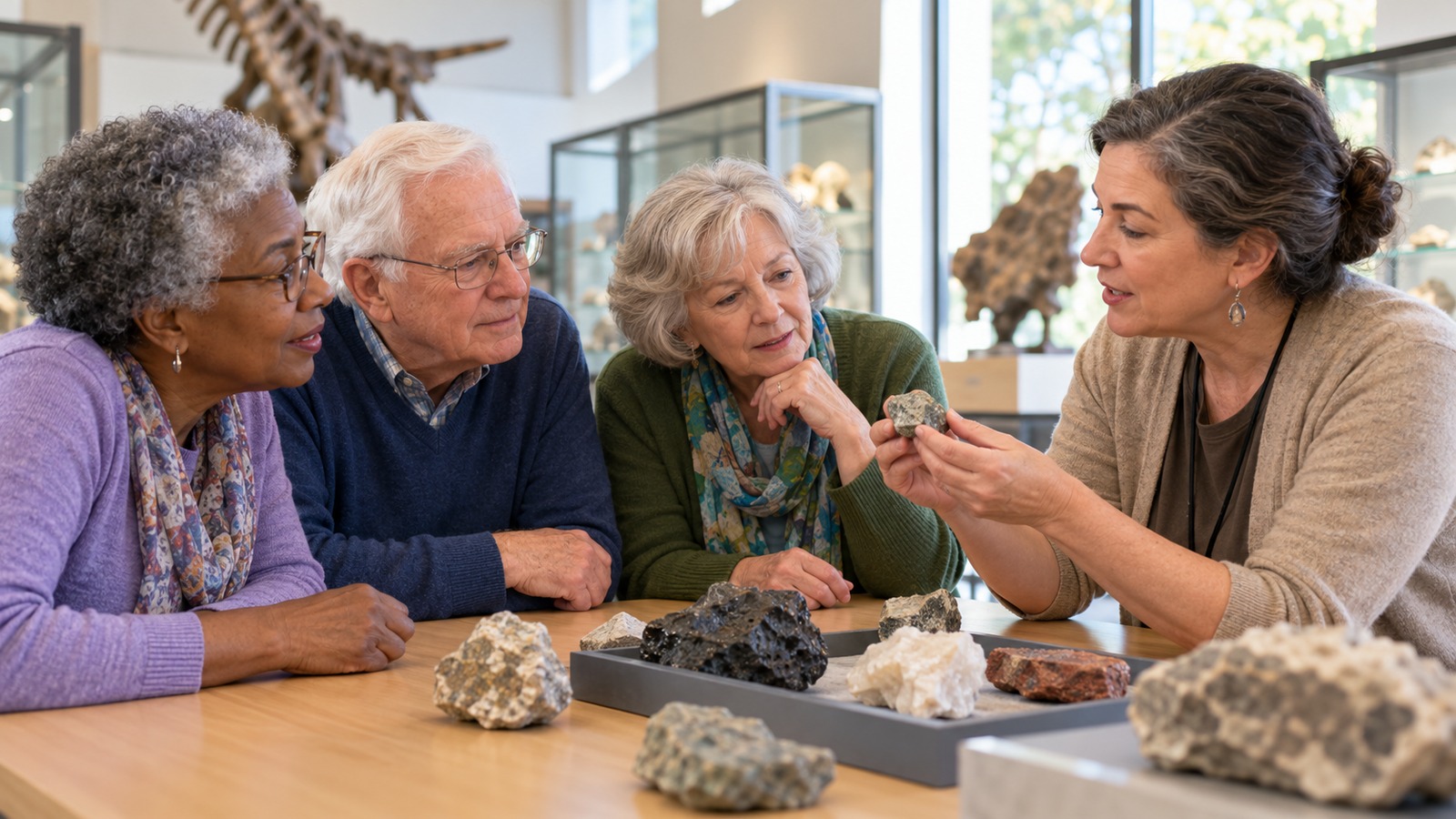
A museum, botanical garden, archive, arts organization, or local history group may offer learning connected to its work. An object, place, or collection can provide a concrete focus for a subject you want to understand. Look for a current official event listing and check the level of prior knowledge expected. A guided introduction and a specialist seminar can have similar titles while offering very different experiences.
Ask about the complete visit. Admission, event fees, transport, walking, seating, and access to facilities may affect the choice. Some programs combine a talk with moving around the site, so clarify the actual demands rather than relying on the word lecture. When an activity is unsuitable, ask whether another format exists. A venue’s educational mission does not by itself establish that every session is accessible to every learner.
Distinguish participating in a course from volunteering for the organization. Both may involve learning, but a volunteer role includes service responsibilities and its own requirements. Choose the arrangement you actually want. You can be curious about a collection without accepting a regular work commitment. Clear expectations make it easier to enjoy the institution’s educational opportunities without discovering an unplanned obligation later.
Compare Practical Workshops by What You Will Be Able to Try
For skills such as drawing, music, textiles, photography, or household techniques, ask how instruction and practice are divided. A demonstration may be interesting while providing little opportunity for hands-on feedback. A workshop should explain the materials, tools, access requirements, and expected starting knowledge. Choose a small introduction when you are unsure whether the process appeals to you. It is reasonable to learn from a first session that the subject is interesting but the particular method or setup does not fit your needs.
Try OpenLearn or Smithsonian Learning Lab for a Small Start
The Open University’s OpenLearn free-course catalog offers a practical way to explore subjects through self-paced study. Browse for a subject you already wonder about, examine the stated level and time commitment, and try a manageable first section. This route suits someone who wants a structured introduction without arranging travel. Read the course’s own current details before relying on a particular feature or outcome.
The Smithsonian Learning Lab offers free discovery of digital museum resources and collections. It can suit someone drawn to a photograph, artwork, object, or natural-history question rather than a conventional course sequence. Begin with one resource and follow the context that interests you. Neither a self-paced course nor a digital collection automatically provides live teaching or companionship. Choose a discussion or supported class as well when that interaction is part of what you want.
Look for Peer Learning With a Clear and Respectful Format
A book discussion, language exchange, study circle, or other peer-led group can make learning conversational. Ask how topics are chosen and what preparation is expected. Some groups welcome a range of experience; others assume substantial knowledge. You may enjoy either setting when you understand it in advance. A trial meeting, if offered, can help you judge whether the pace and style suit you.
Notice how disagreement is handled. A learning group should allow questions and uncertainty without ridicule. One confident participant should not be treated as an authority on every subject simply because they speak often. Look for a process that encourages evidence, appropriate sources, and space for different participants. Respectful conversation does not require everyone to accept unsupported claims, but it should allow people to ask how a conclusion was reached.
Consider whether the group provides the kind of contact you want. Learning together can create familiarity, but not every group is intended as a social club. Ask about optional activities rather than assuming access to members’ private time. Your own boundaries matter too. You can participate in a discussion without accepting unrelated invitations or sharing personal information beyond what you want to contribute.
Include Independent Learning as a Real Option
For university-level self-study, MIT OpenCourseWare publishes free course materials without registration or enrollment. It is a materials resource rather than an enrolled course with personal instruction. Inspect a course’s syllabus and available material to judge whether it matches your starting knowledge. You might study one useful topic rather than follow the entire sequence. If a subject proves too advanced, look for the foundation it assumes and begin there. Books, official archives, and reliable educational recordings can play a similar role in an independent project: choose a clear question, spend time with a suitable source, and let the next question grow from what you understand.
Compare Access, Time, and Total Cost Together
Make a practical comparison of the options you could actually attend. Include travel, course hours, preparation, materials, membership, technology, and any additional event costs. A low advertised fee can be less suitable when transport is difficult. A nearby session may fit better than a renowned course whose schedule conflicts with your responsibilities. Ask about available assistance or alternatives, but confirm their terms before depending on them.
Describe access needs before enrollment when they affect participation. You may want information about seating, hearing access, text format, rest facilities, or online navigation. Ask what the provider can offer for the actual course rather than assuming a general policy answers every detail. You should not need to disclose more personal information than necessary to explain the arrangement you require. A clear answer helps you choose with confidence.
Start Small Enough to Judge the Teaching
When possible, choose an introductory session, sample lesson, or short series before a large commitment. Notice whether explanations are clear, the pace is manageable, and the activity matches the description. Ask how to clarify confusion and whether support is available between sessions. A demanding subject can still be taught respectfully. Difficulty alone does not make the course unsuitable, but an unexplained mismatch deserves attention.
Separate the subject from the provider if the first attempt disappoints you. You may still want to study the topic through another teacher, a different format, or a more appropriate starting level. Use the experience to identify the specific issue rather than deciding that you are too old to learn. Your question might be about prior knowledge, access, practice time, or teaching style, each of which suggests a different adjustment.
Keep any cancellation, refund, or transfer terms in mind when selecting the first commitment. Read the provider’s current policy and retain the relevant confirmation. A trial should not create an unexpected long subscription or fee. Practical clarity leaves more attention for the learning itself. It also allows you to step back thoughtfully if the course is not the experience you were seeking.
Choose the Opportunity That Keeps Your Curiosity Active
The best lifelong learning opportunity is the one that connects an interesting subject with an arrangement you can use. You may choose a local talk, a structured institute course, a practical workshop, an online series, or a private reading project. No single format needs to meet every interest. You can combine approaches or change them as your preferences and circumstances develop.
Begin with one current official listing or resource and clarify the remaining practical details. Attend, try, read, or discuss enough to notice whether you want to continue. Let that experience guide the next choice. Learning in later life can have depth without becoming a credential race and pleasure without being trivial. Your curiosity deserves a setting that gives it room to develop at a pace and scale that fit you.