Make What You Know Easier for Someone Else to Understand
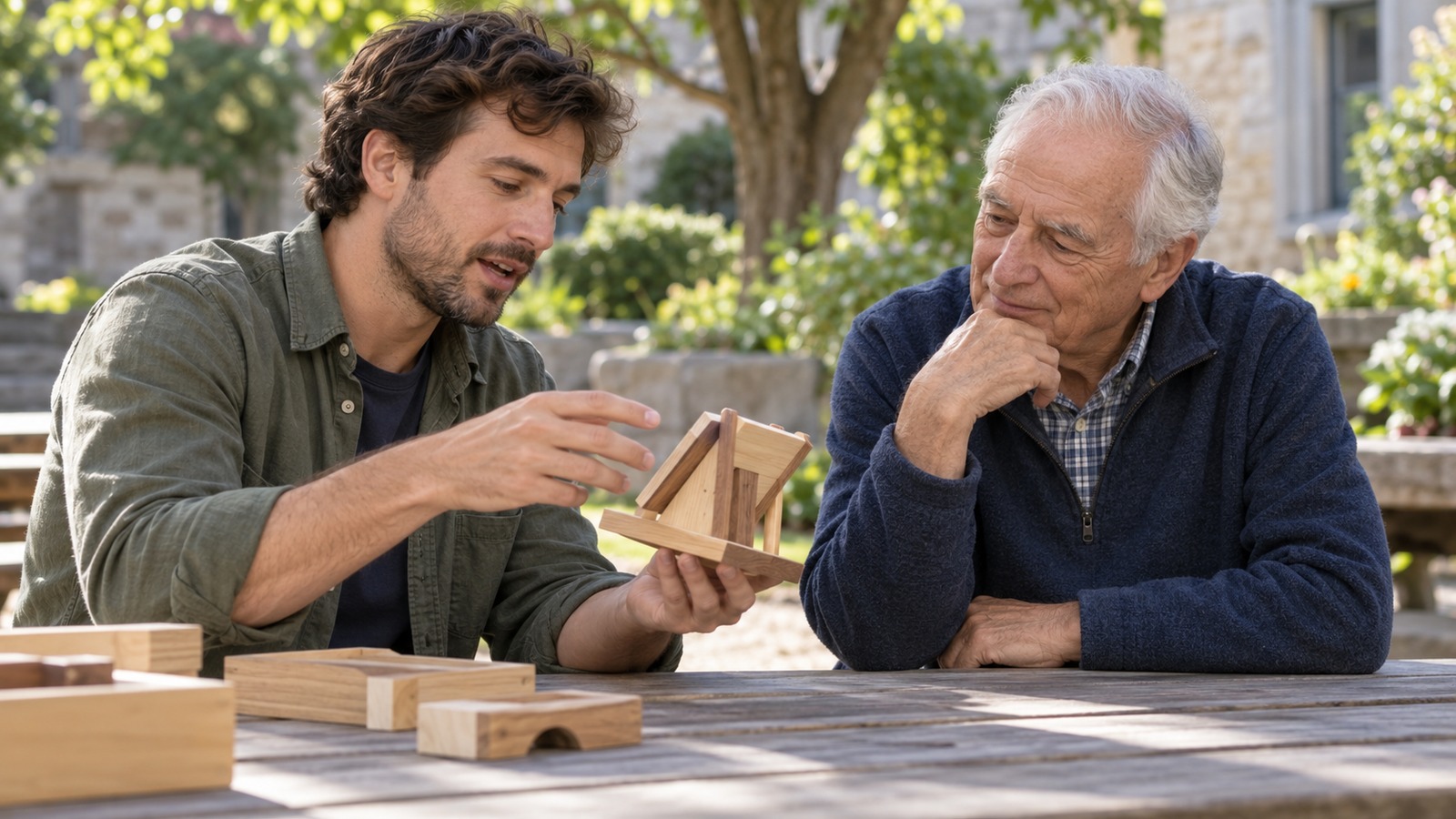
A familiar skill can be surprisingly difficult to explain when someone asks why you do one part before another. Years of practice may have turned decisions into habits you barely notice. Sharing knowledge with a younger generation begins by making those habits visible and finding out what the learner actually wants to understand. You might demonstrate a practical skill, record a family story, explain a past decision, or create something together. The exchange does not have to become a formal mentoring relationship. It can be a short, welcome opportunity in which your experience meets another person’s curiosity. Choose a clear subject, agree on the form, and leave room for the learner’s questions, methods, and current knowledge to shape what happens next.
A: Offer a specific invitation and give them room to accept, adapt, or decline.
A: Find their starting point and choose a manageable subject that addresses the actual interest.
A: Ask about it and compare relevant requirements without turning the exchange into a generational contest.
A: Yes. Context and personal understanding can matter without a required lesson.
A: No. Make a record only when it serves a purpose and the relevant people consent.
A: Treat it as information about the explanation needed and make the hidden decision clearer.
A: Yes. Both people may bring useful knowledge and capabilities.
A: Acknowledge the change and consult an appropriate reliable source.
A: Follow appropriate supervision, consent, screening, and safeguarding arrangements rather than assuming informality removes them.
A: A clearer concept, a responsibly attempted task, a story understood, or a new question can all matter.
Begin With an Invitation Instead of a Duty to Listen
Ask whether the person would like to learn something you can share. Mention a specific subject or activity rather than offering an unlimited lesson in life. They may be interested in a household skill, a family memory, the history of a place, or a way you approached a project. A clear invitation makes it easier to decide whether the exchange fits their interests and available time.
Accept the answer without making interest a test of respect. A person may value you while not wanting to learn that particular subject now. They may prefer another format or have a question you did not expect. Listen to those preferences. Knowledge is more likely to become useful when the recipient has a reason to engage, rather than an obligation to sit through a lesson so that you feel appreciated.
Find Out What They Already Know
Ask what the learner wants to do and what they have already tried. If they want help arranging photographs, for example, they may already know how to use the device but want a way to choose and order the images. That calls for a different explanation from a first lesson in opening a photograph. Start from the problem they describe.
Invite them to show you one attempt or explain where they become unsure. You can then make the missing decision visible. Perhaps the difficulty is choosing between two similar pictures, or deciding whether an album should follow time or a theme. A concrete question gives your experience something relevant to address without requiring a complete account of everything you know about photographs.
Listen for knowledge you can learn from too. The younger person may use a convenient tool or understand the people who will see the result better than you do. Ask how their method works before recommending a replacement. Comparing approaches can make the exchange more interesting than deciding which generation’s habits are superior.
Agree on a useful stopping point. For a short visit, you might arrange three pictures into one sequence and leave the rest for later. The learner ends with a small result and a method they can try again. You can offer another conversation when wanted. Keeping the explanation bounded makes it easier for both people to notice which part helped and what still needs exploration.
Choose One Subject You Can Explain Responsibly
Separate lived experience, personal opinion, practical skill, and specialist advice. You may know a task well without being qualified to advise on every problem connected to it. Choose something within your competence and check current information when details may have changed. Health, legal, financial, safety, or regulated technical decisions may need qualified guidance beyond a casual exchange. Being clear about that limit does not diminish what you can share. It makes it easier for the learner to understand where your experience is useful and where another source is needed.
Break a Familiar Process Into Visible Decisions
Before demonstrating, notice the choices you usually make automatically. What do you check first? Which sign tells you to pause? Why do you choose one tool or material rather than another? Explaining those decisions can be more useful than moving quickly through a complete task. The learner needs access to the thinking behind the routine, not only a view of experienced hands working at full speed.
Use ordinary language and explain necessary terms as they arise. Avoid introducing a long vocabulary list before the person can see its purpose. Show one manageable part and pause for questions. When appropriate, ask them to describe what they noticed rather than simply asking whether they understand. Their account can reveal a missing explanation without turning the exchange into a formal examination.
Use a Demonstration That Leaves Room to Try
Try a low-stakes demonstration with three photographs of an ordinary event. Put them in the order the event happened and explain why you placed each one there. Then move the final image to the beginning and ask what a viewer might wonder. You have shown a decision as well as a procedure: order can change the story an audience expects.
Invite the learner to arrange another set and explain the choice. They might prefer a surprise at the beginning or choose a theme instead of a time sequence. Ask which image provides the context a viewer needs. There is room to discuss a tradeoff without declaring your own arrangement the only correct version. The learner is practicing judgment, with a small result they can see. Try looking at both arrangements side by side and describe the different impression each creates. You might discover that their sequence tells a more interesting story for the intended audience, giving you something new to learn from the demonstration too.
Finish by asking how they would use the method in a project they care about. A family album, school presentation, or personal collection may call for different choices. Listen before offering another example. If the conversation leads to an unfamiliar tool or question, investigate it together. Your contribution is to help them see and use a decision, while their purpose determines what happens next.
Share Stories With Enough Context to Be Useful
A story about work, family, or community can carry practical knowledge that a list of instructions misses. Explain the situation, the choices available, and what happened. Distinguish what you remember directly from details you learned later or interpretations you formed afterward. The listener can then understand the account as an experience with a context, rather than a rule about how everyone should behave.
Leave room for their response. A younger person may notice a different issue or explain why the same option would not be available now. Treat that as part of the conversation. Avoid ending every story with a demand that they adopt your conclusion. Sharing a history can strengthen understanding even when the listener draws a different lesson or simply values knowing more about your experience.
Create a Record Only When It Serves a Clear Purpose
A short recording, written explanation, photograph sequence, or labeled sample can help someone revisit what you shared. Ask which form would be useful and obtain consent before recording another person. Consider privacy, storage, access, and who may receive a copy. A family story or demonstration can remain private. There is no need to publish every useful exchange or create a complete archive before sharing a single piece of knowledge. Choose a format the intended recipient can actually find and use later.
Use Projects to Make the Exchange Mutual
A shared project can give both people a reason to contribute. You might organize a small family collection, prepare a suitable recipe using reliable guidance, make an approved household item, or research a local place. Agree on the outcome and each person’s responsibilities. Keep the scale manageable enough that the project supports the relationship rather than becoming a deadline neither person wanted.
Invite the younger person’s ideas about tools and methods. They may suggest a digital way to organize material or a different design that suits the intended use. Ask how it works before assuming it replaces the value of your experience. You can contribute context and practical judgment while they contribute another capability. A project can hold both without requiring either person to become the permanent teacher or assistant.
Make decisions about the finished result together. A recording, object, or collection may contain contributions and private information belonging to several people. Ask before sharing it widely, giving it away, or using it in another project. Mutual respect should continue after the enjoyable making session ends. Clear ownership and permission help the exchange remain a positive experience instead of creating an unexpected disagreement later.
Find Suitable Community Settings for Wider Sharing
If you want to share beyond family or friends, ask an appropriate local organization about its current needs. A library, community program, professional association, or educational group may consider a defined demonstration, talk, or project. Explain the subject, audience, practical requirements, and your relevant experience. The organization should decide whether the contribution fits its program and what screening or preparation applies.
Confirm who handles registration, supervision, access, materials, and concerns during the event. Working with children or other protected participants can bring additional requirements. Do not assume that an informal offer removes those responsibilities. You can explore a smaller adult session or another suitable format if the initial idea is not appropriate. A clear arrangement lets you focus on sharing what you know within a setting able to support it.
Respond to Different Learning Styles With Practical Choices
People may prefer a spoken explanation, a written reminder, a demonstration, or time to attempt the task. Ask what helps rather than assigning a fixed label to how the person learns. Combine suitable methods when useful and check what they understood. Give specific feedback connected to the activity. A mistake can identify the next explanation needed without becoming a judgment about intelligence, character, or an entire generation. Patience is most useful when it changes what you do: slow down, clarify a decision, choose another example, or leave room for practice.
Let the Exchange End With More Agency for the Learner
Ask what the person would like to try or explore next, and let them choose within the appropriate limits of the task. You can offer another conversation or a reliable resource without taking over. Avoid requiring your preferred method as proof that they valued the lesson. Knowledge becomes part of their life when they can use judgment about how and when it applies.
Notice what you learned about explaining your own experience. A question may have revealed an assumption, prompted you to verify an old practice, or suggested a better example. That is a worthwhile result for you too. Sharing across generations can preserve knowledge while allowing it to be examined and updated. Continuity does not require every method to remain unchanged.
Begin with one welcome invitation and a subject you can explain clearly. Share the context, show the thinking, and make space for the other person’s contribution. A useful exchange can be small: a concept understood, a story heard, a task approached more thoughtfully, or a question worth pursuing together. Your experience has a place when it helps someone else engage with their own world, rather than asking them to live inside yours.