Match the Assistance to the Person and the Movement
Movement assistance can range from explaining a route or arranging equipment to providing assessed physical support during a transfer. Those forms of help are not interchangeable. A senior who needs time to process an instruction may not need lifting, while someone unable to support their weight may need equipment and trained assistance that a companion cannot safely replace. The central question is what this person needs for this particular movement in this setting. This guide explains how to organize that support across daily life, identify the limits of general advice, and make a movement plan usable by everyone involved. It does not teach a universal hands-on transfer method. Physical assistance and equipment use should be assessed and demonstrated by an appropriate professional before a helper attempts them.
A: No. They are different roles with different requirements.
A: No. Communication supports an already suitable assessed method.
A: Not unpredictably; equipment assistance should follow the agreed plan.
A: Not as a substitute for assessment and training for the actual person.
A: No. Surfaces, space, and equipment arrangements may differ.
A: Request review and appropriate assistance rather than improvising.
A: Yes. Report relevant changes and follow the reviewed plan.
A: Do not substitute a different method without professional guidance.
A: Yes. Preparation, transport, supplies, and communication can be valuable roles.
A: Clear explanation, privacy, and choice are part of respectful effective assistance.
Separate Setup, Cueing, Supervision, and Physical Support
Before deciding how to help, identify the kind of assistance required. Setup might mean placing an approved aid where it can be reached or clearing the destination. Cueing might help a person remember an agreed sequence. Supervision involves the presence specified in a care plan, while hands-on assistance introduces different responsibilities and risks. A vague instruction to help them move does not define which of these roles is intended. Ask the assessor to make the distinction clear. It can prevent unnecessary physical contact and also reveal when a helper is being asked to do more than they have been trained to provide.
Start With an Individual Movement Assessment
An appropriate clinician or moving-and-handling professional should evaluate the person and the tasks that need assistance. The assessment considers what the person can do, relevant restrictions, symptoms, equipment, and the setting. It should not be replaced by a judgment that someone looks strong enough or has managed a similar task before. Explain difficult movements and recent changes without staging an unsafe demonstration.
The HSE moving-and-handling guidance emphasizes person-specific planning and review when needs change. Its UK workplace requirements are not a description of US law, but the general safety principle is useful: assistance should be assessed, documented, and matched to the actual situation. Ask who is qualified to assess the task through your local care service.
Request a plan that describes the required help clearly enough to use. It should distinguish movements that can be done with a cue from those requiring trained physical assistance or equipment. If a recommendation depends on two helpers, confirm that both will be available. An assessment that assumes support you do not have needs further planning before the movement is attempted.
Review the Entire Route Before Beginning
A movement plan should include where the person starts, where they are going, and the demands between those points. A short trip to a porch can involve standing, turning, a threshold, a door, and an appropriate place to sit. Check that the destination is ready rather than discovering a problem after the person has begun. Clear unnecessary obstacles and consider lighting, floor condition, and the space needed for the prescribed aid.
Avoid solving access by removing essential support. A narrow passage that makes a walker difficult to use is a reason to review the route or environment, not to leave the walker behind without advice. Likewise, furniture positioned as a handhold needs assessment; ordinary objects are not automatically suitable supports. Explain the real layout to the professional so the recommended method fits the route instead of relying on a generic room diagram.
Agree on Communication Before the Person Moves
Tell the older adult what help is planned and ask whether they are ready. Use clear instructions that fit their hearing, language, vision, and cognitive needs. Allow time for a response rather than stacking several directions together. When more than one trained helper is involved, agree who leads the communication according to the assessed method. A shared readiness signal can make an approved plan easier to follow, but counting aloud does not make an unsuitable lifting method safe. Respect hesitation and refusal; investigate discomfort, confusion, or another barrier instead of treating resistance as permission to move the person by force.
Use a Walking Aid as It Was Assessed
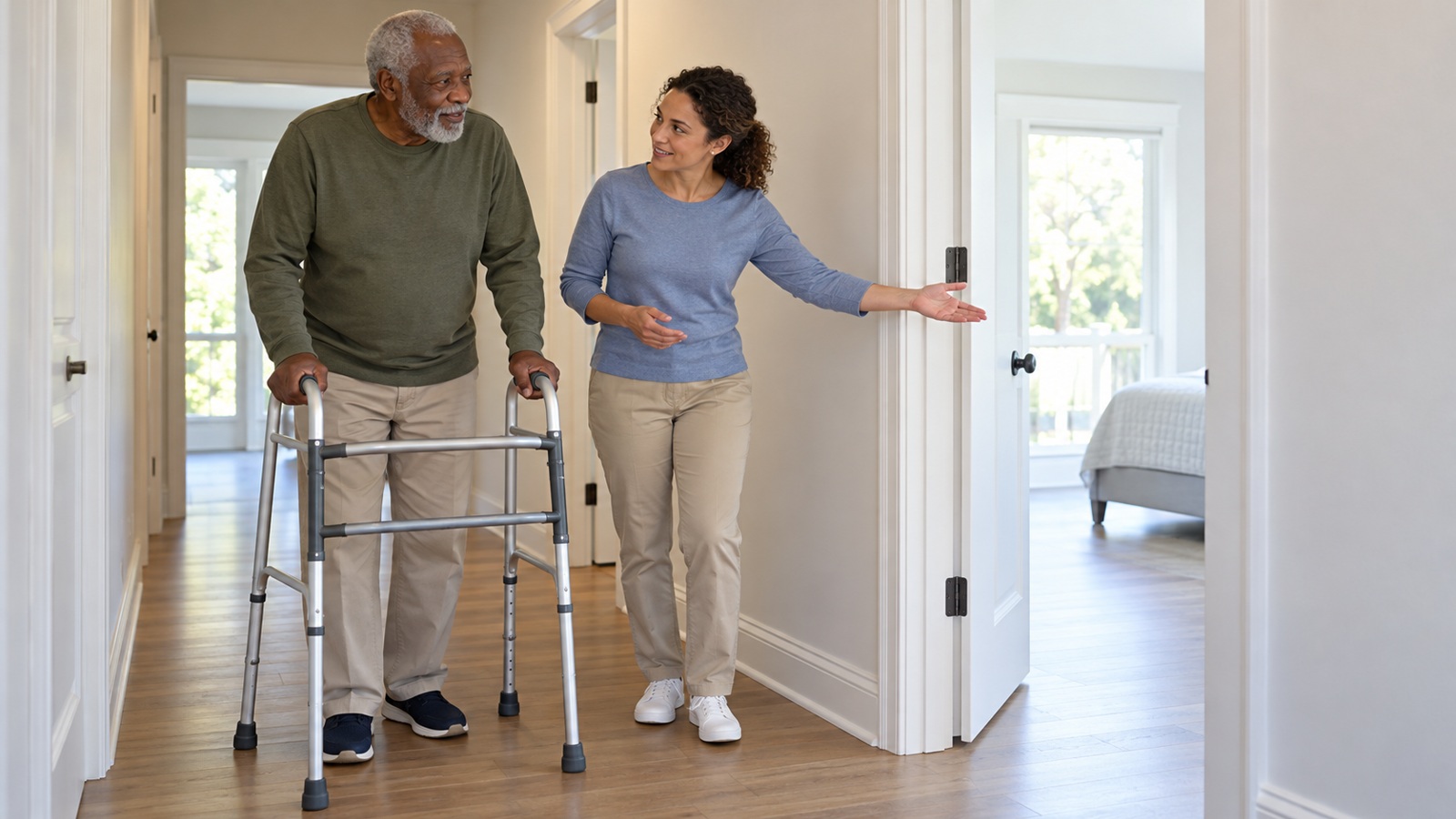
A walking aid should suit the person and be used in the way they have been taught. Check relevant parts according to its instructions and report a defect or a change in comfort. If the person needs help managing the aid, ask what that help should involve. A companion should not steer, pull, or reposition it unpredictably while the person is relying on it.
Walking assistance also needs a defined role. Being nearby, giving a cue, and providing hands-on support are different arrangements. Ask where the helper should be and what they are trained to do if the movement becomes difficult. Do not assume that holding an arm is always an appropriate substitute for the prescribed method. The plan should be clear before entering a doorway, turning, or approaching a change in level.
Equipment that is unfamiliar should be reviewed before use, even if it resembles the usual aid. A borrowed walker may differ in height, brakes, wheels, or handling. Transport and storage arrangements should preserve the aid’s condition and availability. Treat these practical details as part of mobility support rather than as accessories to be solved during the journey.
Transfers Need Their Own Instructions
Moving between a chair, bed, toilet, or wheelchair is not simply walking a shorter distance. The transfer has starting and finishing surfaces, possible changes in height, equipment arrangements, and the person’s participation to consider. Ask for assessment of the actual transfer rather than assuming that success in another setting applies. A caregiver should not pull on the arms, use clothing as a lifting handle, or ask the person to hang around their neck. Those shortcuts can injure both people. Follow the demonstrated plan and obtain help when its requirements cannot be met. General mobility advice cannot authorize a hands-on technique for an unassessed situation.
Select Devices With Professional Guidance
Transfer boards, stand-assist devices, slide sheets, hoists, and other aids serve different purposes and require different abilities and training. An item should be selected for the assessed task, not bought because a video makes it look effortless. Ask about compatibility, space, maintenance, and who will use it. Instructions for one model should not be assumed to apply to another.
The NHS information for people assisting movement recommends professional advice and training. Its service-access details are UK-specific; ask your own care team how assessment and equipment provision work locally. A product demonstration by a seller is not the same as a person-specific transfer assessment. Have the whole arrangement reviewed before using the device with the older adult.
Give Helpers a Plan They Can Follow Consistently
Keep the current movement instructions available to the people authorized to assist. Identify the task, the required assistance, relevant precautions, and the equipment version. Avoid vague labels such as one-person help unless the helper also understands what that means for this movement. The document should support training rather than replace it.
When help changes hands, clarify whether the incoming person has been taught the method. Being willing to assist does not establish competence. A family visitor may need to leave a transfer to a trained caregiver while helping with a different task. Agreeing on those boundaries ahead of time prevents an uncomfortable negotiation while the older adult is already in a vulnerable position.
Remove ambiguity between old and current plans. A restriction may have changed, or a device may have been replaced. Ask the care service to identify which instructions now apply and where questions should be directed. Do not create a hybrid method by combining parts of several demonstrations. Consistency means following the current assessed arrangement, not repeating a habit after its conditions have changed.
Recheck When the Person or Setting Changes
A new illness, pain, dizziness, fatigue, or change in ability can affect whether the usual movement plan remains appropriate. Tell the professional overseeing care rather than treating the difference as a temporary inconvenience to push through. Daytime and nighttime assistance may also differ. Explain when the problem occurs so the review addresses the relevant circumstances.
Changes in furniture, flooring, clothing, equipment, or the helper can matter too. A transfer that worked beside one chair may not work beside another. Ask before substituting a different surface or rearranging the room in a way that alters access. The plan should travel with the relevant information, not with the assumption that every similar-looking setting is equivalent.
Plan for Stopping and Obtaining Help
A safe movement plan includes what to do when the person is not ready, a symptom appears, equipment is defective, or required assistance is missing. Clarify those situations before attempting the task. If someone falls, do not improvise a floor lift; assess the need for urgent medical help and follow the relevant emergency or care-service advice. Serious injury, loss of consciousness, or stroke-like symptoms require appropriate emergency action. Helpers should not assume they can catch or lift another person’s full weight without risk. Training and an emergency plan matter precisely because an unexpected difficulty is not the time to invent a technique.
Protect the Helper's Health as Part of the Care Plan
The helper’s ability and limitations belong in the assessment. Back pain, restricted movement, limited strength, or difficulty understanding instructions can change what support is appropriate. Do not hide those concerns because you want to be useful. A plan that injures the helper can also interrupt the older adult’s care.
Ask for training, a suitable equipment arrangement, or different assistance when the task is beyond your capacity. More effort is not a substitute for an appropriate method. If a care service’s recommendation seems impossible to follow safely, request review and describe the practical difficulty. Clear reporting is preferable to silently improvising a workaround.
Share responsibility sensibly across the wider routine. A person unable to provide hands-on assistance may still arrange transport, prepare the destination, manage supplies, or make a call. These roles can be valuable without crossing training boundaries. Safer movement support is a coordinated arrangement in which the older adult and helpers know what they can do and where additional expertise is needed.
Keep Dignity Visible in Everyday Assistance
Explain the movement to the person directly, even when family members or staff are present. Ask about comfort, privacy, and the way they prefer help to be offered. An efficient task should not reduce someone to an object being relocated. Where appropriate, retain the parts of movement they can perform within the assessed plan. That participation may support both autonomy and a clearer understanding of how the movement feels. A pause, a different cue, or a review of the arrangement can be more useful than repeatedly insisting that the person cooperate. Assistance works best when it is informed, predictable, and respectful.
Make Equipment Handover More Than a Delivery
When a device arrives, confirm that the right person receives instruction and that the assessed arrangement is complete. Check whether the professional needs to review it in the room before use. A box at the doorway does not establish that the equipment is ready for a transfer.
Keep the supplier’s service contact and the clinical contact distinct. The supplier may address a mechanical fault, while the assessor decides whether the person’s changing ability affects suitability. Ask whom to call when the concern is unclear. That separation helps prevent a repair conversation from being mistaken for approval of a new movement method.